This training series is comprised of 10 half-day live streaming modules which build upon and deepen concepts introduced in the Foundations series. The series is designed for therapists who have completed Level 1 ESFT certification and are currently working toward Level 2 ESFT certification. Typically, these are therapists in their second and third year of family-based training. Each of the 10 modules are structured similarly. They begin with a one-hour didactic describing one ESFT concept or skill and a video demonstrating the concept or skill. There are then two case presentations including videotaped family sessions where application of these concepts and methods are discussed. The case material is often used to create role-plays so that all participants have an opportunity to practice ESFT skills.
The overarching goals for the core clinical series are aligned with the skills required to complete Level 2 certification. These include the following:
- Deepen trainees’ ability to develop trauma-informed, developmentally grounded, systemic case conceptualizations that link children’s presenting problems to the relational context of the family and community ecosystem.
- Sharpen trainees’ ability to identify, track, and utilize emotional processes therapeutically in family sessions.
- Strengthen trainees’ ability to recognize personal or team induction into negative family process and effectively regain a balanced therapeutic position.
- Consistently recognize opportunities to disrupt the NIP and use enactments to help families build more functional patterns.
- Consistently keep the focus on relationships in sessions and maintain a facilitative role.
- Maintain equal empathy for all family members and cultivate a positive, strength-based collaborative relationship with them.
This series counts toward required annual training hours in Family Based Mental Health Services but is not currently available for CE credit.
Core Clinical Topics
Training Hours: 8:30am-1:00pm
Training Hours Provided: 4.5
Core Clinical Training 1: Steps to Certification in ESFT: From Learning the Model to Demonstrating Competence
Adam Bogusk, MDiv
ESFT certification is more than a credential—it is a developmental pathway from understanding the model to demonstrating the ability to practice it with intention, fidelity, and skill. This training provides therapists with a clear roadmap through Level I and Level II ESFT certification while exploring the clinical growth each level is designed to cultivate.
Core Clinical Training 2: Enactments with Purpose: Common Errors and How to Avoid Them
Adam Bogusk, MDiv
Enactments are among the most powerful interventions in systemic family therapy—and among the easiest to mistake for something simpler than they are. Drawing from recurring patterns observed in ESFT Level II certification and the Family Therapy Enactment Scale, this training examines common errors in the conceptualization and implementation of enactments. Reasons why these errors occur are explained, and practical strategies for correcting them are identified.
Core Clinical Training 3: Recognizing and Managing Proclivities for Induction
Frani Pollack, MSW, PhD
Family therapists are at risk of being drawn into negative relational patterns, emotional processes, and triangles that organize family functioning. This presentation explores how therapists can develop greater self-awareness of their own proclivities for induction—recognizing the roles, alliances, emotional reactions, and interactional pulls they may be invited to assume—and use that awareness to maintain therapeutic balance and intervene more effectively.
Core Clinical Training 4: How to Effectively Map the Negative Interaction Pattern (NIP)
C. Wayne Jones, PhD
In this presentation, each of the six components of the NIP are described, illustrating how they fit together to create a systemic understanding of recurring family interactions. The components of the NIP that are most often misunderstood and underdeveloped on the one-page NIP case conceptualization form are given particular attention.
Core Clinical Training 5: Eliciting Change from the Outside In
Jorge Colapinto, LMFT
ESFT is based on Structural Family Therapy, a model developed by Dr. Minuchin and colleagues at Philadelphia Child Guidance. This presentation illustrates how systemic therapists help families develop more functional patterns.
Core Clinical Training 6: The Role of Affect in Family Treatment
Andrew Fussner, MSW & Adam Bogusk, MDiv
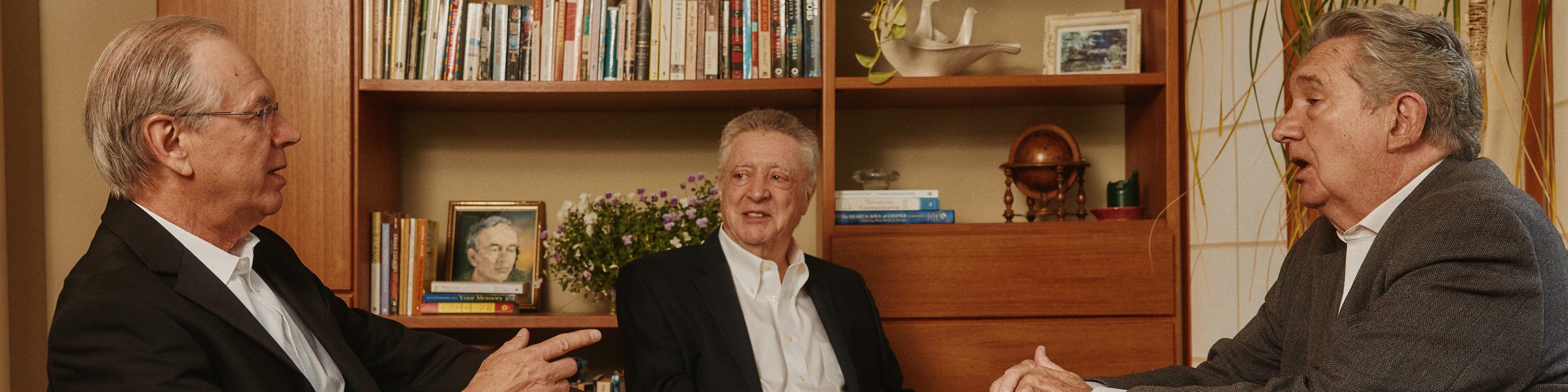
In this presentation, Adam Bogusky facilitates a conversation with Andy Fussner, a family therapist with more than 50 years of clinical experience. Mr. Fussner will share stories from his years of practice to highlight the importance of attuning to subtle emotional cues of family members in the room, both to identify the meaning of a child’s symptoms in relational context and to join with the family.
Core Clinical Training 7: Finding Meaning: Updated Perspectives on Grief and Loss
Jeffrey M. Friedman, PhD, LCSW, QCSW
Perspectives on loss and grief are provided illustrating their contribution to the four drivers of ESFT treatment. Consideration for their contribution to the six components of the negative interaction patterns (NIP) becomes essential.
Core Clinical Training 8: Addressing Forgiveness in a Family
Scott Browning, PhD
In this presentation, participants will examine the decision to either forgive another or move toward acceptance. The stages of forgiveness will be clarified and acceptance will be articulated.
Core Clinical Training 9: The Genogram Based Interaction Measure (GBIM)
Scott Browning, PhD
In this presentation, participants will be introduced to the GBIM. This tool is a useful instrument for both guiding further treatment and measuring interactional decline or improvement. The instrument has been field tested and has both sufficient reliability and validity. The GBIM is easy to administer and can be utilized without shifting away from ongoing therapy.
Core Clinical Training 10: Families Formed by Adoption: Seven Core Issues
Jeffrey M. Friedman, PhD, LCSW, QCSW
The seven core issues in adoption are reviewed, illustrating their contribution to the four drivers of treatment and how they inform specific “action steps” in each specific to families formed by adoption. Each of the seven core issue’s critical components receive particular attention.