
Archives

An Introduction to Suicide Assessment

June 4, 2025, Catholic Charities, Harrisburg via Zoom Webconference
8:25am-10:30am, 10:40am-12:35pm

Assessing suicidal behaviors is one of the most challenging scenarios facing mental health clinicians with both patient death and serious injury as potential adverse outcomes. Challenges include identifying both chronic and acute risks for suicide and interviewing patients in an empathetic and organized manner that facilitates sharing painful or sensitive information. Stress is often high for both patient and clinician and can make accurate assessment difficult. This seminar will review evidence-based practices developed by leading emergency psychiatrists and suicide researchers and present an organized strategy for comprehensive suicide assessment giving clinicians the best chance to identify suicidal risks and accurately interview patients so that providers can make accurate treatment decisions. This seminar will make use of lecture of theoretical content and role play of practical scenarios to facilitate learning.

Objectives

As a result of participating in this workshop, attendees will be able to:

1. Identify chronic and acute risk factors for suicide.

2. Conduct a structured interview of suicidal events.

3. Incorporate behavioral approaches to facilitate discussion of suicidal topics.

4. Construct a basic safety plan to facilitate treatment planning.

About The Trainer
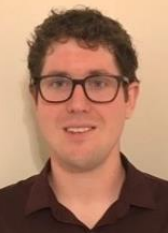
Kevin Hoffman is a psychiatrist in Philadelphia, Pennsylvania. After completing a combined MD,  PhD program at the Icahn School of Medicine at Mount Sinai in New York, NY, he completed a residency in psychiatry at the University of Pennsylvania. He is currently completing a fellowship in Child and Adolescent Psychiatry at the Children’s Hospital of Philadelphia and will join Stanford University’s Department of Psychiatry this summer as a child psychiatrist primarily working in the Immune Behavioral Health Clinic at Stanford.


Frequently Asked Questions
Visit our FBMHS Policies & FAQs for additional information regarding the CFBT online learning center, accommodations for disabilities, reporting problems with the course, instructions for viewing webinars, etc.

Deconstructing Addiction

March 5, 2025, Catholic Charities, Harrisburg via Zoom Webconference
8:25am-10:30am, 10:40am-12:35pm

This training is intended for clinicians providing services to people with mental health and substance use disorders. Participants will be introduced to the two prevailing theories of addiction, the supporting evidence for each, and will be introduced to a third perspective that is gaining recognition in the field of addition. This new perspective integrates aspects of both the choice and disease model and presents a more holistic, person-centered framework to understand addiction, helping them understand the root causes of addiction and common themes and patterns in addiction.

Through this new framework, participants will be challenged to view addictions in a more adaptive way, improving their ability to relate to, support, and help clients struggling with substance use disorders. Participants will also learn how to identify substance use disorders using the DSM-5 as well as being able to determine the severity, risk factors, and protective factors to make informed clinical recommendations for treatment.

Participants will also learn effective methods to build strong rapport and a workable therapeutic alliance with clients in recovery from SUD, including pitfalls to avoid and trade secrets that can keep clients active and engaged through early, middle, and late treatment. Participants will leave the training with a set of specific skills, strategies and interventions they can use to help clients trying to overcome addiction.

Objectives

As a result of completing this training activity, participants will be able to:

  1. Explain the choice and disease model of addiction, the central tenets of each theory, and the deficiencies of each in providing an accurate and adaptive understanding of addiction.
  2. Develop a more holistic understanding of addiction, being able to explain root causes, common co-occurring disorders, and functional uses of drugs and alcohol
  3. Learn the 11 symptoms of substance use disorders, and will be able explain how to determine severity of the disorder
  4. List risk and protective factors for people with substance use disorders, and explain the effect these have on treatment
  5. Accurately identify the drugs with the highest risk for overdose and withdrawal symptoms
  6. Develop an “elevator speech” for early treatment which includes a.) accurate empathy, b.) an adaptive explanation of addiction, c.) an individualized treatment recommendation, and d.) a hopeful outlook for recovery

About The Trainer

Hailey Shafir is a licensed clinical mental health counselor, a licensed addiction specialist, and a board-approved clinical supervisor for newly licensed mental health and addiction counselors. She has more than a decade of experience providing counseling and has also helped to develop programs for at-risk youth, people struggling with addictions, and to train new clinicians. She is the owner of several businesses including Keep Counsel, Plan-it Therapy, and Selfhelpers, and is a content writer and medical peer reviewer for several national and international websites including Addictions.com, the National Drug Helpline, Choosing Therapy, Rehab Adviser, and Social Pro Now.


Frequently Asked Questions
Visit our FBMHS Policies & FAQs for additional information regarding the CFBT online learning center, accommodations for disabilities, reporting problems with the course, instructions for viewing webinars, etc.

Living Our Codes: Boundaries and Ethics with Youth and Families

A Live, Interactive Webconference
September 18, 2024, via Zoom Interactive Webconference
8:25am-12:35pm

Living out one’s ethical code is a challenge when a practitioner wants to engage youth and their family in a therapeutic context. The complexity of interactions and boundaries can confuse any practitioner, especially when conducting services in the community or home setting. Living Our Codes looks at ethics in the context of family therapy and how to use established decision-making strategies to maintain professional integrity. An emerging focus for ethical practice is establishing the practitioner’s self-care routines as an essential component for strong therapeutic alliances and outcomes. The workshop will help practitioners examine how self-care impacts their ability to create strong alliances while maintaining professional boundaries.

As a result of participating in this training, attendees will be able to:

  1. Differentiate between ethics, law and morality
  2. Demonstrate the use of Rossey’s 5 Steps to Ethical Decision Making.
  3. Distinguish the difference between boundary crossing and boundary violations.
  4. Summarize the importance of self-care in establishing a therapeutic alliance with youth and families

Agenda

  • 8:25am-10:30 am: Objectives 1 & 2
  • 10:30am-10:40am: Break
  • 10:40am-12:35pm: Objective 3 & 4

This is an intermediate level course. The target audience is behavioral health professionals working within an Ecosystemic Family Therapy Model. This is a live synchronous distance learning activity conducted in real time, allowing for simultaneous participation of participants and instructors from different locations.

Frequently Asked Questions
Visit our FBMHS Policies & FAQs on Live, Interactive Webconferences for additional information regarding CFBT live interactive workshops, accommodations for disabilities, reporting problems with the training, instructions for registering for a training, etc.

Understanding and Treating Stepfamilies: A Subsystem–Based Approach

A Live, Interactive Webconference
Wednesday, June 5, 2024, via Zoom Interactive Webconference
8:25am-12:35pm

This workshop will present a practical approach for understanding and treating stepfamilies.  Both living in and working with step-families can be complicated and challenging at times.  Stepfamily Therapy (Sft), an evidence-based model, was co-developed by Dr. Browning. It is an approach that has been outlined in his co-authored book from APA Books.  This workshop will highlight common mistakes of family therapists who work with stepfamilies and present ways for helping professionals to avoid them.

As a result of participating in this training, attendees will be able to:

  1. Recognize the unique needs of stepfamilies;
  2. Observe demonstrations of treatment with stepfamilies;
  3. Recognize family therapy techniques not suited for stepfamilies;
  4. Practice specific techniques that work with stepfamilies;

Agenda

  • 8:25am-10:30 am: Objectives 1 & 2
  • 10:30am-10:40am: Break
  • 10:40am-12:35pm: Objective 3 & 4

This is an intermediate level course. The target audience is behavioral health professionals working within an Ecosystemic Family Therapy Model. This is a live synchronous distance learning activity conducted in real time, allowing for simultaneous participation of participants and instructors from different locations.

About The Trainer
Scott W. Browning, Ph.D. is a professor emeritus in the Department of Professional Psychology at Chestnut Hill College in Philadelphia.  He is a noted authority on psychological treatment with stepfamilies.  As a scholar, teacher and clinician, Scott has explored the intricacies of treating stepfamilies, and has provided advanced training in the treatment of stepfamilies to clinicians and graduate students both nationally and abroad.

Frequently Asked Questions
Visit our FBMHS Policies & FAQs on Live, Interactive Webconferences for additional information regarding CFBT live interactive workshops, accommodations for disabilities, reporting problems with the training, instructions for registering for a training, etc.

Suicide Assessment and Treatment through an Interpersonal Lens

A Live, Interactive Webconference
Wednesday, March 6th, 2024, via Zoom Interactive Webconference
8:25am-12:35pm

This presentation is designed to support clinicians in assessing and treating suicidality, utilizing the framework of Joiner’s Interpersonal Theory of Suicide. Participants will be introduced to the core components of the model, which together influence an individual’s risk of dying by suicide. The research suggests that when clinicians feel more confident in their assessment abilities, they are more likely to engage in effective suicide risk assessments and treatment. Throughout the presentation, participants will have the opportunity to work in small groups to explore personal beliefs about suicide, practice strengths-based suicide assessment, and develop comprehensive safety plans.

As a result of participating in this training, attendees will be able to:

  1. Summarize the Interpersonal Theory of Suicide
  2. Demonstrate strengths-based suicide assessment techniques.
  3. Create a comprehensive safety plan.

Agenda

  • 8:25am-10:30 am: Objectives 1 & 2
  • 10:30am-10:40am: Break
  • 10:40am-12:35pm: Objective 3 & Wrap-up

This is an intermediate level course. The target audience is behavioral health professionals working within an Ecosystemic Family Therapy Model. This is a live synchronous distance learning activity conducted in real time, allowing for simultaneous participation of participants and instructors from different locations.

Frequently Asked Questions
Visit our FBMHS Policies & FAQs on Live, Interactive Webconferences for additional information regarding CFBT live interactive workshops, accommodations for disabilities, reporting problems with the training, instructions for registering for a training, etc.